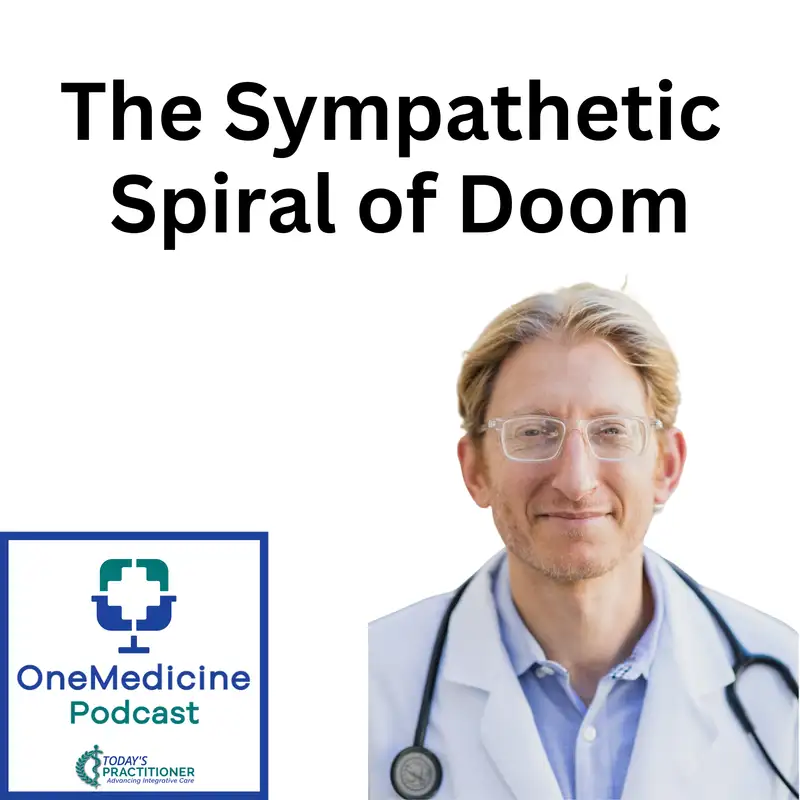
The Sympathetic Spiral of Doom: Why So Many Patients Stay Stuck
From Survival Mode to Recovery: A Four-Phase Roadmap for Complex Patients
Millions of patients struggle with fatigue, anxiety, poor sleep, and low resilience even when conventional testing looks “normal.” In this episode, Rob Lutz talks with Dr. Scott Scher about the sympathetic spiral of doom—a clinical framework connecting mitochondrial dysfunction, oxidative stress, autonomic imbalance, and immune-endocrine signaling in a self-reinforcing loop.
Dr. Scher explains why energy first matters, how patients can get stuck in chronic fight-or-flight, and why treatments like breath work, nervous system retraining, and even supplements can backfire when introduced too early. He also walks through the four-phase model he uses to identify where a patient is in the spiral and how to sequence care so interventions actually land.
Key Moments:
00:00 - Intro
19:12 - Energy first framework for treating patients
42:14 - Clinical example of sequencing changing outcomes
50:09 - Key concept: energy equals less anxiety
Notable takeaways
· Energy first: Patients often need better mitochondrial support before nervous-system downregulation will help.
· Sequence matters: Interventions that help a phase 1–2 patient can overwhelm a phase 3–4 patient.
· Symptoms are often interconnected: Fatigue, anxiety, insomnia, mood shifts, and poor recovery may reflect the same underlying loop.
· Small gains can unlock bigger progress: Once patients have more energetic capacity, they can tolerate lifestyle, stress, and deeper healing work better.
About Dr. Scott Scher
Dr. Scher is an internal medicine physician with an integrative practice in Boulder, Colorado. He is also involved with Health Optimization Medicine and Practice (HOMeHOPe) and works to help clinicians focus on optimizing health, not just treating disease.
Sponsored by Doctor’s Supplement Store - https://doctorssupplementstore.com/
Thanks for listening in. I hope you found today’s episode interesting and came away with a few insights you can apply to your practice. If you want to go deeper on this topic or anything else, please visit https://todayspractitioner.com and consider registering for our weekly newsletter as well.
Thanks again, and I hope you’ll join us next time.